
 EN

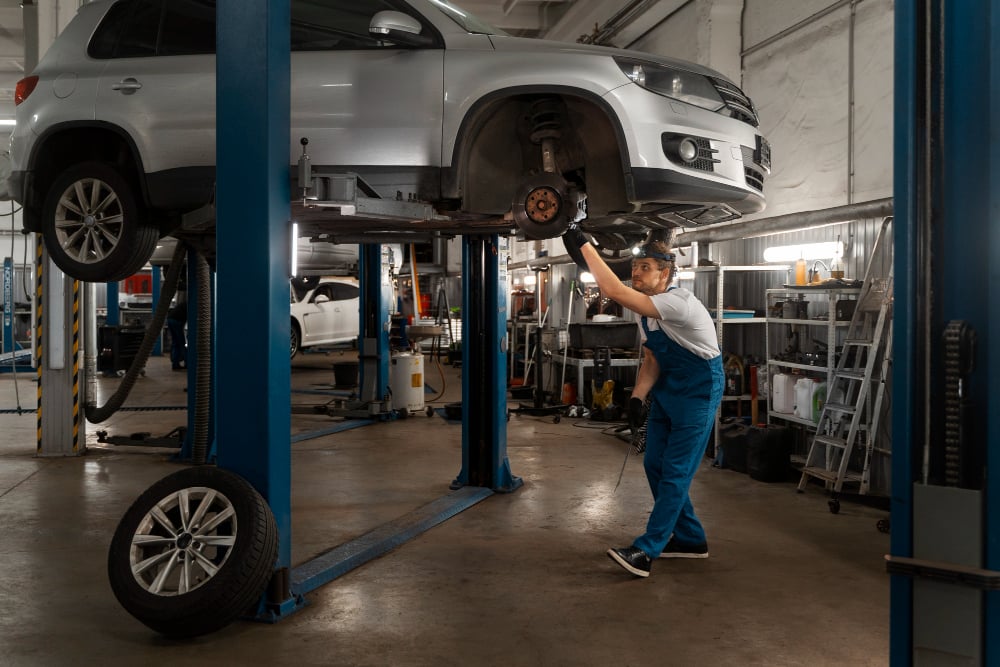
Selecting the right car lift for your automotive workshop is a foundational investment decision that dictates daily operational productivity, technician safety, and service bay throughput. A reliable car lift elevates vehicles to comfortable working heights, allowing technicians unhindered access to undercarriage components. However, because modern automotive repair facilities handle diverse jobs—from routine oil changes and wheel alignments to heavy transmission overhauls—choosing the optimal vehicle lift configuration requires careful evaluation. At Cavalry, we assist workshop managers, fleet owners, and mechanics in evaluating workshop dimensions, vehicle weight requirements, and daily service offerings to choose the perfect car lift.
Two-Post Lift: The Versatile Workhorse for Mechanical Repairs
The two-post lift remains a timeless standard across professional automotive repair shops worldwide. Featuring two vertical columns and adjustable swing arms, a two-post lift raises the vehicle by engaging its frame lifting points, leaving all four wheels hanging freely.
Mechanical Architecture and Variations
Two-post lift models generally come in two primary designs: asymmetric two-post lift configurations and symmetric two-post lift configurations. Asymmetric models tilt the columns slightly backward and utilize shorter front arms, allowing vehicle doors to open wider for easier cabin access. Symmetric models center the vehicle load directly between the columns, offering maximum structural balance for heavier trucks and commercial vans. Additionally, shop owners can choose between clear-floor overhead two-post lift designs (which route hydraulic lines overhead) or floor-plate models suitable for low-ceiling bays.
Primary Applications and Requirements
-
Best Service Uses: Suspension repairs, exhaust system replacement, brake maintenance, oil pan access, and engine or transmission drops.
-
Technical Considerations: A two-post lift requires a solid concrete floor with a minimum thickness of 4 inches (rated at 3000 PSI) to safely anchor the heavy column footings. Cavalry recommends two-post lift equipment for general mechanical repair shops seeking maximum under-car clearance.
Four-Post Lift: Ultimate Stability for Wheel Alignment and Fleet Service
A four-post lift relies on four sturdy steel columns connected by two long drive-on runways. Unlike frame-engaging lifts, vehicles drive directly onto the runways of a four-post lift, distributing vehicle weight evenly across four solid anchor points.
Operational Features and Mechanics
Because vehicles rest on their tires on a four-post lift, this design offers superior structural stability and higher weight capacity. Most four-post lift models feature integrated locking ladders, heavy-duty steel cables, and high-capacity hydraulic cylinders. For wheel-free undercarriage work, shop technicians can equip a four-post lift with optional pneumatic rolling bridge jacks that elevate individual axles off the runway.
Primary Applications and Requirements
-
Best Service Uses: Precision 3D wheel alignment, suspension diagnostic inspections, commercial fleet maintenance, and long-term vehicle storage.
-
Bay Footprint: A four-post lift occupies a larger floor footprint and requires sufficient drive-on runway clearance. Cavalry notes that a four-post lift is indispensable for shops performing frequent wheel alignment jobs or servicing heavy commercial vans.
Scissor Lift: High Efficiency for Tire Shops and Compact Bays
A scissor lift utilizes pantograph-style folding steel legs positioned directly under the vehicle chassis or wheels. Driven by hydraulic cylinders, a scissor lift raises vertically without requiring tall side columns.
Types and Operational Advantages
Scissor lift systems are available as mid-rise scissor lift units or full-rise scissor lift models, and can be installed flush in-ground or surface-mounted. Portable scissor lift models feature integrated wheel kits, enabling mechanics to move the scissor lift across different bays effortlessly.
Primary Applications and Requirements
-
Best Service Uses: Rapid tire changing, brake pad service, body detailing, and quick-lube services.
-
Space Efficiency: Because a scissor lift retracts flat against the concrete floor when lowered, it optimizes valuable floor space in compact workshops. Cavalry advises tire service centers to utilize scissor lift machinery to increase daily vehicle turnover.
Single-Post Lift: Maximum Mobility for Body Shops and Tight Spaces
When floor space is severely limited or mobility is required, a single-post lift provides a practical, versatile lifting solution. Utilizing a single heavy-duty hydraulic column, a single-post lift elevates vehicles via adjustable frame-engaging arms or platform ramps.
Design and Functionality
Many single-post lift units operate on a heavy-duty pallet-jack steering mechanism, allowing technicians to roll the single-post lift wherever needed inside the garage. Once positioned, the single-post lift raises the vehicle smoothly while leaving one entire side of the undercarriage completely open.
Primary Applications and Requirements
-
Best Service Uses: Auto body panel repair, paint preparation, light mechanical tasks, and detailing shops with narrow work bays. Cavalry recommends a mobile single-post lift for versatile workshops needing flexible equipment placement.
Car Lift Feature Comparison
To help shop owners evaluate options and choose the right car lift, Cavalry has structured this comparative guide:
| Car Lift Type | Primary Lifting Method | Best Workshop Applications | Floor Space Footprint |
| Two-Post Lift | Frame-engaging swing arms | Suspension, brakes, engine & transmission work | Medium footprint (requires wide ceiling clearance) |
| Four-Post Lift | Drive-on runways | Wheel alignment, fleet service, vehicle storage | Large footprint (requires long runway space) |
| Scissor Lift | Under-chassis pantograph mechanism | Tire changing, brake maintenance, detailing | Compact footprint (surface or flush in-ground) |
| Single-Post Lift | Single column with swing arms | Bodywork, paint prep, light mechanical service | Ultra-compact & fully mobile |
Key Factors When Purchasing a Car Lift with Cavalry
Selecting the ideal car lift requires matching equipment specifications with your facility's daily workflow. Cavalry recommends evaluating four critical factors before making a purchase:
-
Weight Capacity and Vehicle Range: Ensure the car lift weight rating (ranging from 9,000 lbs to 15,000 lbs) easily accommodates passenger cars, SUVs, and light trucks.
-
Ceiling Height and Floor Concrete: Verify overhead clearance for full-rise two-post lift and four-post lift models. Check concrete depth and structural integrity prior to anchor installation.
-
Safety Locking Systems: Every car lift supplied by Cavalry incorporates automatic mechanical safety locks and durable hydraulic velocity fuses to protect technicians during operation.
-
Service Specialization: Match the car lift design to your core service offerings—choose a four-post lift for precision alignment, a two-post lift for mechanical repair, or a scissor lift for tire service.
Conclusion and Professional Advice from Cavalry
Investing in the correct car lift boosts shop throughput, reduces physical strain on technicians, and enhances workplace safety. Whether your workshop requires the mechanical versatility of a two-post lift, the alignment stability of a four-post lift, the compact speed of a scissor lift, or the mobility of a single-post lift, Cavalry provides industry-leading garage lifting equipment engineered for long-term durability. Contact Cavalry today to discover the ideal car lift for your facility.