
 EN
What Separates a Truck Wheel Balancer From a Passenger Car Unit
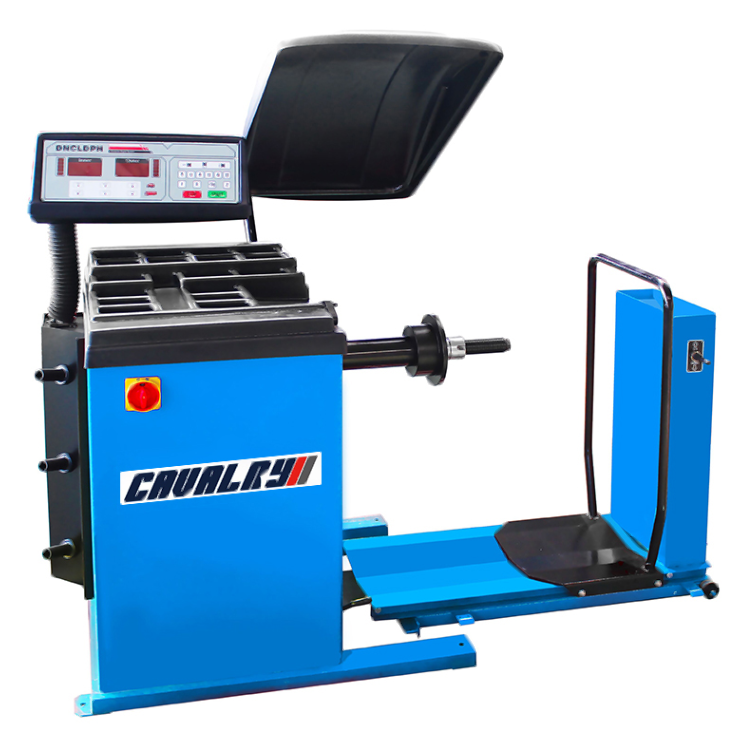
A heavy-duty truck wheel balancer is not just a scaled-up passenger car machine. The differences show up in the spindle, adapter system, force sensors, and the way the unit handles a 100-pound or heavier wheel assembly. Passenger car balancers often max out around 150 pounds. Commercial truck balancers are built for wheel assemblies that can reach several hundred pounds, depending on tire size, rim type, and whether the wheel carries a sensor or foam fill. A spindle that deflects under load can produce a reading that looks stable but does not match real road behavior.
Load Capacity and Mounting Hardware Matter More Than RPM
RPM gets attention because it is easy to market, but in truck wheel balancing, low-speed torque and repeatable centering matter more. A heavy truck tire has a large moment of inertia. Spinning it too fast creates heat, noise, and safety concerns. Most commercial balancers operate at moderate speed and rely on sensitive force sensors to pick up imbalance. The adapter is the real hero. Cone adapters work for many hub-centric wheels. Flange plates and pin plates are better for stud-centric wheels. A mismatch here can send the correction to the wrong plane. The ISO 21940-11 standard, which covers procedures and tolerances for rigid rotors, treats a wheel and tire assembly as a rotor that may need single-plane or two-plane correction depending on width and speed. Adapter selection is the foundation of a trustworthy reading.
| Feature | Light-duty balancer typical range | Heavy-duty truck balancer typical range |
|---|---|---|
| Max wheel assembly weight | 100 to 200 lb | 500 to 1,500 lb |
| Rim diameter | 10 to 26 in | 20 to 30 in or more |
| Tire diameter | Up to about 30 in | Up to about 60 in |
| Shaft bore range | 1.5 to 3 in | 4 to 6 in |
| Adapter style | Cone, small plate | Heavy cone, flange, pin plate |
| Balance speed | Higher, lighter rotor | Moderate, high inertia |
| Runout measurement | Optional | Often built in |
Measurement Modes and Runout Diagnostics That Keep Fleets Rolling
A good truck wheel balancer does more than calculate where to place weights. It separates imbalance from runout. Radial runout is the up-and-down wobble of the tread surface. Lateral runout is side-to-side movement. A wheel can be perfectly balanced and still vibrate if the tire has a stiff spot or the rim is bent. Better machines offer runout measurement, match mounting, and static or dynamic modes. Static mode is useful for narrow wheels. Dynamic mode is needed for wide steer and drive tires. Some units also provide optimization, which rotates the tire on the rim to cancel high spots. That feature can save a tire that would otherwise be scrapped. The tradeoff is cycle time. Runout checks and match mounting add minutes per wheel, so the workflow needs to account for them.
The Operator Interface and Daily Workflow
A heavy-duty truck wheel balancer lives in a dirty, noisy, and time-pressed environment. The interface needs to be readable from a few feet away, with gloves on, and under poor lighting. Touchscreens can work, but physical buttons still have a place when hands are covered in tire lube. The weight tray should hold large clip-on and adhesive weights without spilling. The hood or guard must clear tall tires and still allow quick loading. Data storage is another practical feature. Storing customer, vehicle, and wheel position data helps a shop track repeat comebacks. Some balancers can print or export a report, which is useful for fleet accounts that want proof of service. The best interface is the one that lets a tech mount, measure, correct, and move on without second-guessing the machine.
Installation, Calibration, and Environmental Reality
Floor condition matters more than many buyers expect. A heavy-duty truck wheel balancer needs a stable, level foundation. Concrete thickness, anchor placement, and vibration isolation all affect repeatability. A machine installed on a cracked or flexing slab can drift out of calibration. Regular calibration with a known test rotor or weight is part of keeping trust in the numbers. Temperature swings also play a role. A shop that opens large doors in winter may see sensor drift if the machine is not allowed to stabilize. The honest limitation is that no balancer can fix a bent rim, a separated tire, or a worn suspension. Balancing is one part of a vibration diagnosis, not the whole answer.
Matching the Machine to the Fleet Mix
The right heavy-duty truck wheel balancer depends on the fleet mix. A shop that mostly handles Class 8 tractors and trailers needs a different setup than one that also services medium-duty trucks, buses, and specialty vehicles. Wheel diameter, tire weight, rim style, and stud pattern all change the adapter requirements. A machine with a wide shaft bore range and interchangeable adapters offers more flexibility. A dedicated high-volume lane may favor faster loading and automated measurement. A mixed-service shop may favor versatility over cycle time. Before buying, check the largest and smallest wheel assemblies that will hit the bay. Check whether the wheels are hub-centric or stud-centric. Check how often runout and match mounting will be used. Those answers point to the right machine faster than a spec sheet full of peak numbers.
During a retrofit at a regional fleet shop in the U.S. Midwest, a set of steer tires on Class 8 tractors kept returning with a vibration complaint around 55 to 65 mph. The shop had been using a passenger car balancer with a cone adapter. The machine read zero, but the wheels still shook. A heavy-duty truck wheel balancer with a pin plate adapter and runout measurement showed the real problem: the wheel was centered on the stud holes instead of the hub bore, so the balancer was correcting the wrong axis. Once the adapter matched the mounting method, the comeback rate dropped.
For shops comparing commercial balancing equipment, CAVALRY has built a name through more than two decades of automotive equipment manufacturing, a portfolio of hundreds of machines, and installations across many countries. The brand's focus on practical engineering, consistent quality control, and supply support makes it a practical starting point for a heavy-duty truck wheel balancer search.
Table of Contents
- What Separates a Truck Wheel Balancer From a Passenger Car Unit
- Load Capacity and Mounting Hardware Matter More Than RPM
- Measurement Modes and Runout Diagnostics That Keep Fleets Rolling
- The Operator Interface and Daily Workflow
- Installation, Calibration, and Environmental Reality
- Matching the Machine to the Fleet Mix