
 EN
Quick Links
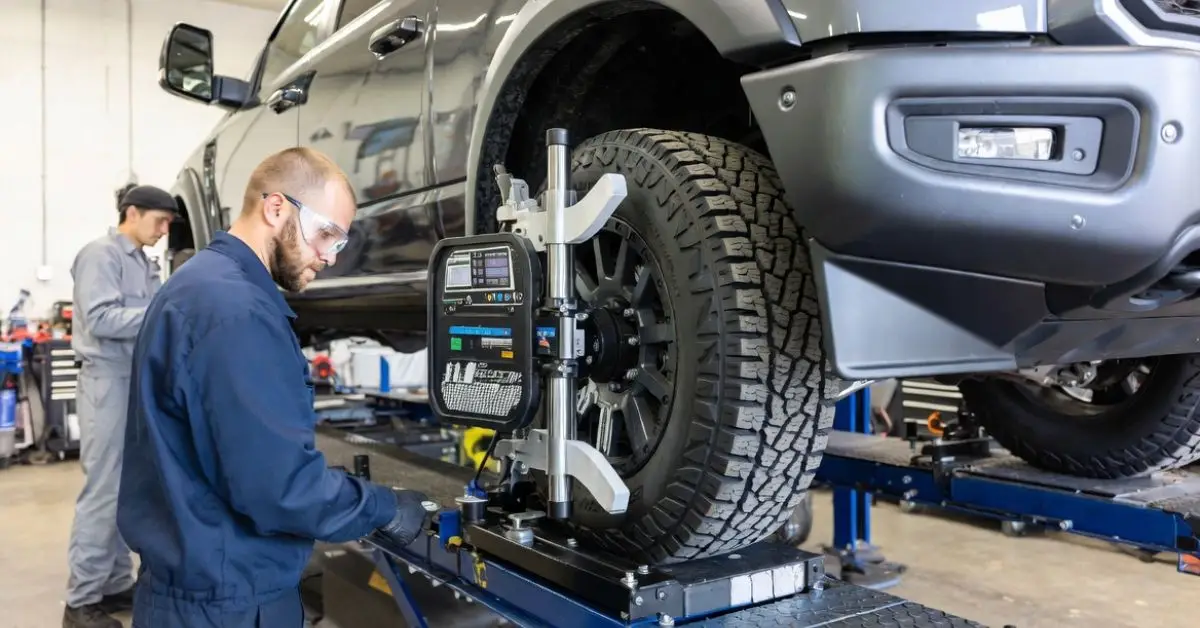
Proper wheel alignment is a fundamental auto maintenance procedure that involves adjusting the physical angles of a vehicle's wheels to meet exact specifications set by the vehicle manufacturer. Precise wheel alignment ensures maximum driving safety, optimal handling, and prolonged tire lifespan. As automotive technology advances, shop owners must equip their service bays with reliable diagnostic tools to stay competitive. Selecting the right wheel aligner is a critical investment decision for any modern auto repair shop or tire service center. At Cavalry, we understand that choosing the ideal wheel alignment system directly impacts your shop's productivity, operational efficiency, and overall profitability.
Whether upgrading outdated equipment or expanding your service capability, understanding the underlying technology is essential. Today, the commercial market is primarily dominated by two optical technologies: CCD wheel aligner technology and 3D wheel aligner technology. This comprehensive buying guide provided by Cavalry explores how these alignment systems function, compares their features, and highlights critical decision factors to help you select the best wheel aligner for your workshop.
At its core, a professional wheel alignment system measures three primary geometry angles: camber, caster, and toe. Accurately measuring these angles ensures that vehicles travel straight without drifting and prevents premature, irregular tire wear. Modern wheel aligner equipment combines optical camera sensors, digital image processing, and specialized software to measure these parameters in real time.
However, the sensor design, physical footprint, and measuring principles differ significantly between a CCD wheel aligner and a 3D wheel aligner. Understanding these distinctions enables shop managers to choose a wheel aligner that aligns perfectly with their available bay space and daily workload.
CCD (Charge-Coupled Device) wheel aligner technology has long served as a trusted standard in automotive repair shops. A traditional CCD wheel aligner utilizes electronic measurement heads attached directly to each wheel. These sensor heads contain optical cameras and light sensors that project infrared beams across the vehicle to communicate positional data to the central computing console.
The basic principle behind a CCD wheel aligner is that it uses cameras and light sensors to capture detailed images of the wheels from multiple angles. These images are analyzed by specialized wheel alignment software to determine the position and orientation of the wheels in relation to each other and to the vehicle body.
Spatial Flexibility: A CCD wheel aligner does not require fixed, bulky camera towers in front of the lift, making it an excellent wheel aligner option for compact workshops, shared bays, or mobile service setups.
Sensitivity to Ambient Light: CCD systems can be impacted by ambient light or strong direct sunlight in the workshop, requiring controlled lighting conditions to prevent optical beam interference.
Sensor Maintenance: Because delicate electronic measurement heads are mounted on the wheels, Cavalry recommends careful handling and regular calibration maintenance to protect long-term measuring accuracy.
Representing a major technological evolution, 3D wheel aligner technology moves electronic sensors off the vehicle wheels and onto heavy-duty camera towers.
A 3D wheel aligner works similarly to a CCD wheel aligner, but incorporates three-dimensional imaging technology. Instead of delicate electronic measuring heads, passive target plates attach to the wheels. A large cross structure fitted with high-resolution digital cameras acts as a fixed reference point for vehicle-mounted targets. The cameras track geometric patterns on the targets in 3D space, allowing the wheel alignment system to calculate precise wheel alignment angles instantly.
System configuration affects measuring speed and shop investment:
4-Camera 3D Wheel Aligner: Utilizes 4 camera sets to measure all four wheels simultaneously, maximizing workshop throughput and speed.
2-Camera 3D Wheel Aligner: Features 2 camera sets, measuring one axle at a time or relying on motorized camera beams.
The large cross structure locks the owner into maintaining a dedicated alignment area with sufficient bay length. However, because target plates contain no electronics, a 3D wheel aligner offers exceptional target durability and zero impact from ambient light. Cavalry notes that passive targets significantly lower long-term equipment maintenance costs.
To help workshop managers evaluate both options, Cavalry has summarized their core technical differences in this breakdown:
| Feature / Metric | CCD Wheel Aligner | 3D Wheel Aligner |
| Sensor Location | Electronic sensor heads on wheels | Passive target plates on wheels |
| Bay Space Requirement | Flexible; suitable for compact bays | Requires dedicated bay with camera tower |
| Ambient Light Impact | CCD systems can be impacted by ambient light | Unaffected by workshop light variations |
| Target Durability | Requires careful handling on wheels | Extremely durable; no electronics in targets |
| Diagnostic Speed | Standard measuring cycle time | High-speed, push-mode measurement |
Selecting the right wheel alignment system requires matching technology with your operational requirements. Cavalry recommends assessing four critical factors:
Bay Layout and Floor Space: If your shop lacks length for a fixed camera tower, a flexible CCD wheel aligner is ideal. For a dedicated alignment bay, a 3D wheel aligner offers superior efficiency.
Daily Service Volume: High-volume service centers benefit from the fast measurement cycles of a 4-camera 3D wheel aligner.
Target Durability & Maintenance: Passive targets on a 3D wheel aligner eliminate costly repairs caused by dropped sensors.
Database & Software Support: Every wheel aligner supplied by Cavalry includes comprehensive, regularly updated vehicle specification databases.
Investing in a modern wheel aligner is essential for increasing workshop capability and growing service revenues. Whether choosing the flexible design of a CCD wheel aligner or the rapid speed of a 3D wheel aligner, Cavalry provides industry-leading wheel alignment technology tailored to your facility. Contact Cavalry today to discuss your wheel aligner needs.
Copyright © 2026 by CAVALRY - Privacy policy
