
 EN
Quick Links
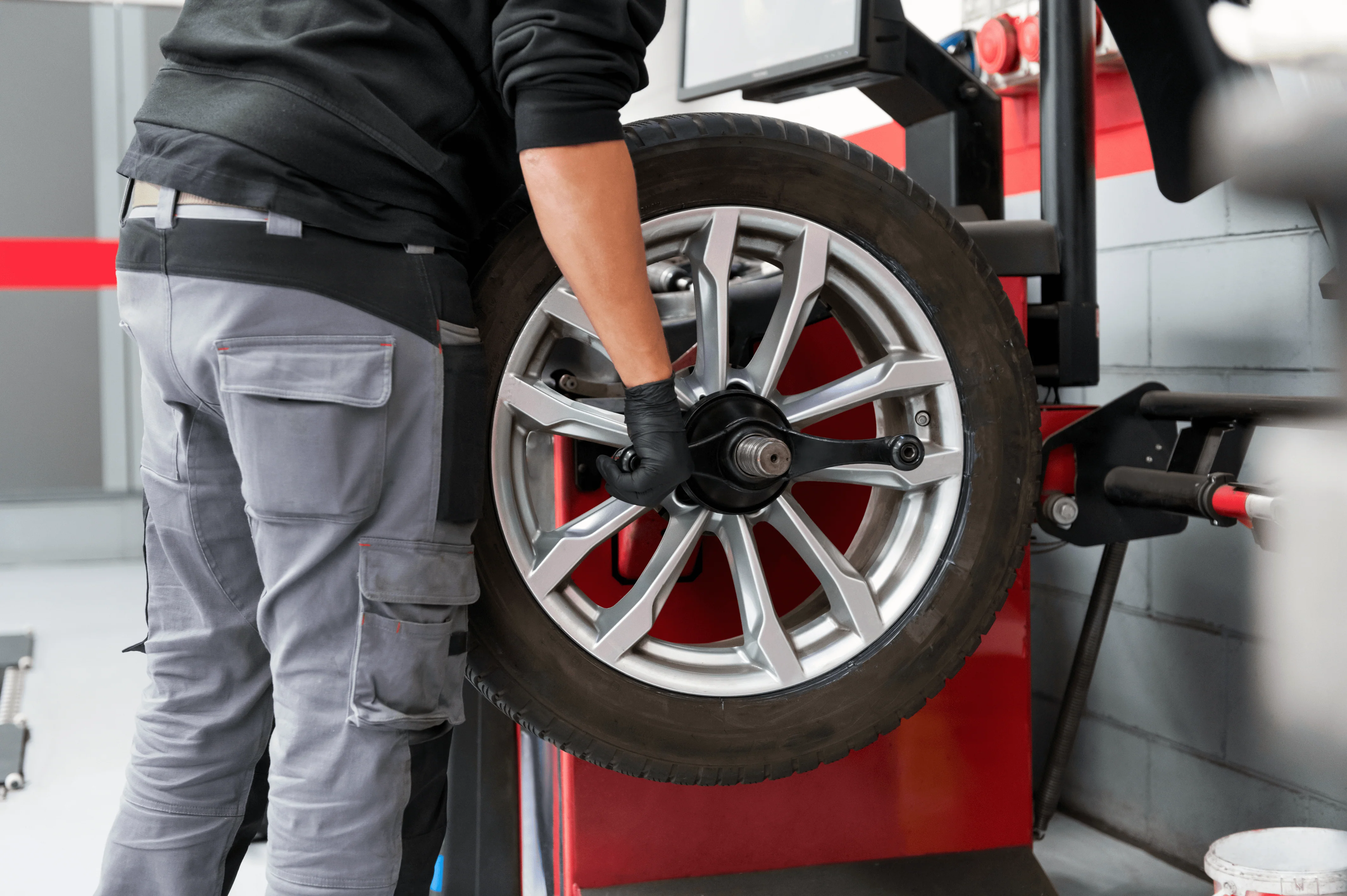
Selecting the right wheel balancer is a strategic investment that directly impacts your auto repair shop's operational efficiency, service quality, and long-term profitability. Proper wheel balancing removes residual unbalance from tire and rim assemblies, eliminating high-speed steering wheel vibrations and preventing premature suspension wear. As modern vehicles incorporate larger alloy rims, lower-profile tires, and sensitive electric power steering systems, precise wheel balancing equipment is essential for every auto service center. At Cavalry, we guide workshop owners in evaluating their daily service volume, workshop space, and budget to choose the ideal wheel balancing machine.
To select the best wheel balancer, technicians must first understand how modern wheel balancing equipment operates. Unbalance occurs in two primary physical formats:
Static Unbalance: Causes a vertical hopping motion (up-and-down vibration) due to a heavy spot on a single radial plane of the wheel assembly.
Dynamic Unbalance: Causes a wobbling or lateral shimmying motion (side-to-side vibration) across two distinct rotational planes.
A modern computerized wheel balancer uses high-precision piezo-electric sensors to detect both static and dynamic unbalance simultaneously during a single spin cycle. Cavalry designs advanced wheel balancer systems that measure force variation down to single grams, ensuring perfectly smooth rides for your customers.
When shopping for a wheel balancer, understanding the primary equipment categories is crucial for matching your workshop's daily workload.
A manual wheel balancer represents the simplest and most economical entry point. With a manual wheel balancer, the technician manually inputs all rim dimensions—distance, width, and diameter—and hand-spins or fine-tunes the wheel positioning.
Best For: Small hobbyist garages, low-volume restoration shops, or mobile service vans with minimal space.
Key Trade-offs: Slower cycle times and higher dependency on operator skill. While a manual wheel balancer gets basic jobs done, high-volume shops will find it labor-intensive.
A semi-automatic wheel balancer strikes a practical balance between cost and operational convenience. These systems utilize automated measuring gauges to capture distance and rim diameter, while the technician manually inputs the rim width.
Best For: Independent tire shops and mid-sized repair garages seeking dependable efficiency at an accessible price point.
Advantages: A semi-automatic wheel balancer speeds up parameter entry compared to manual units, reducing operator error while delivering highly consistent balancing results. Cavalry recommends semi-automatic models for shops servicing 10 to 25 vehicles daily.
A computerized wheel balancer is the ultimate solution for high-volume tire centers and dealership workshops. Featuring sophisticated microprocessor controllers, digital LED or LCD displays, and multi-axis optical sensors, a computerized wheel balancer delivers unmatched speed and diagnostic accuracy.
Best For: High-throughput tire centers, commercial workshops, and garages servicing luxury or performance vehicles.
Advanced Capabilities: Automatic 3D sonar or gauge arm data entry, laser-guided weight placement, hidden weight programs (ALU-S) for custom alloy wheels, and rapid 6 to 8 second spin cycles.
Efficiency Impact: A high-performance computerized wheel balancer minimizes diagnostic time and ensures flawless wheel balancing performance on the very first spin.
To help workshop managers evaluate each wheel balancing machine option, Cavalry has structured a comparative breakdown:
| Feature / Metric | Manual Wheel Balancer | Semi-Automatic Wheel Balancer | Computerized Wheel Balancer |
| Data Entry Method | Fully Manual Input | Semi-Automatic (2D Gauge) | Fully Automatic (3D Sonar/Laser) |
| Average Spin Cycle Speed | 15 to 20 Seconds | 10 to 12 Seconds | 6 to 8 Seconds |
| Operator Error Risk | Moderate | Low | Minimal |
| Alloy Wheel ALU Modes | Basic Manual Placement | Standard Preset Modes | Advanced / Hidden Weight Program |
| Recommended Daily Volume | Less than 10 Wheels | 10 to 30 Wheels | 30 plus Wheels |
Before committing to a specific wheel balancer purchase, Cavalry highlights four essential hardware specifications that guarantee long-term ROI:
Shaft Diameter and Precision Mounting: Look for heavy-duty, hardened steel balancing shafts (such as 36mm or 40mm) equipped with precision mounting cones. A rigid shaft guarantees repeatable measuring accuracy for every wheel balancer.
Maximum Wheel Weight and Diameter Capacity: Ensure the wheel balancing equipment can handle light commercial trucks, SUVs, and heavy aftermarket wheel packages without straining the drive motor.
Laser Positioning and ALU Programs: Modern alloy wheels require adhesive weights hidden behind spokes. A computerized wheel balancer with laser placement points ensures exact weight application every single time.
Calibration and After-Sales Support: Regular calibration keeps your wheel balancing machine performing at peak accuracy. Cavalry provides full calibration protocols, spare parts availability, and long-term technical assistance.
Expert Tip from Cavalry: Incorrect wheel clamping is responsible for over 80% of balancing errors. Investing in high-precision flange plates and quick-clamping wing nuts alongside your wheel balancer ensures proper wheel centering on the shaft every time.
Upgrading your workshop with the right wheel balancer directly drives customer satisfaction, tire longevity, and shop throughput. Whether you need an affordable semi-automatic wheel balancer or a top-tier computerized wheel balancer, Cavalry offers industry-leading wheel balancing solutions engineered for long-term reliability and precision. Contact the garage equipment specialists at Cavalry today to select the perfect wheel balancing machine for your facility.
Copyright © 2026 by CAVALRY - Privacy policy
